
Trasteo y acción
Fret buzz on the first few frets
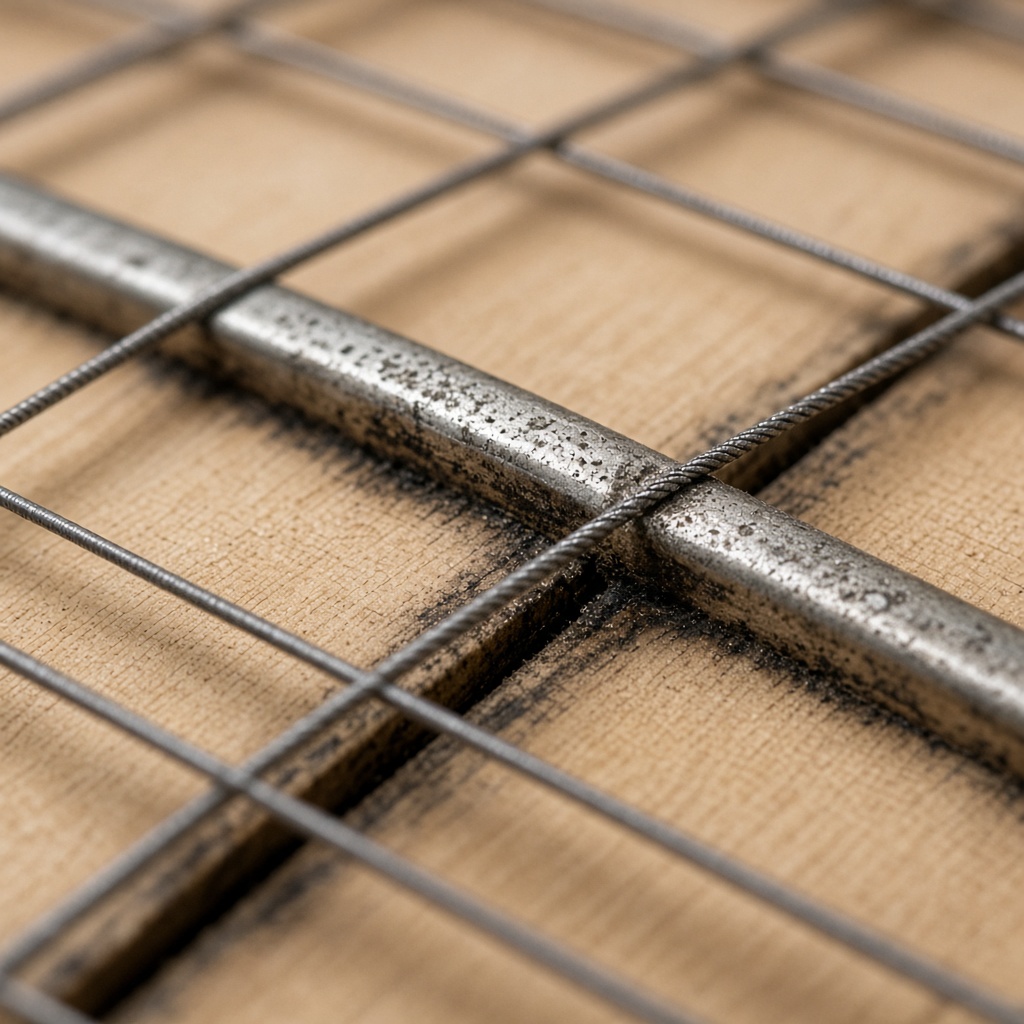
The strings produce a hum, fret buzz, or loss of clarity primarily between the first frets, although the rest of the fretboard may function correctly.
Método Raven
Cómo se diagnostica en taller
En problemas de Trasteo y acción, el diagnóstico empieza por delimitar cuándo y dónde aparece el síntoma. Las hipótesis a separar incluyen - Ranuras de la cejuela demasiado profundas, Origen relacionado, Origen relacionado y Origen relacionado. La causa se confirma por observación comparativa antes de intervenir.
Servicios
Servicios Raven relacionados
Intervenciones que pueden corresponder según el diagnóstico. Los precios son los del servicio.
Professional independent diagnosis — 50 €
Diagnóstico / revisión previa. También útil como revisión periódica preventiva.
50 €
Preamp structural diagnosis prior to repair — 45 €
Diagnóstico / revisión previa.
45 €
Full assembly, complete electronics, and full setup — 290 €
Solución principal según causa confirmada.
290 €
Nut adjustment or saddle — 30 €
Solución principal según causa confirmada.
30 €
Nut cut incorrectly — 55 €
Solución principal según causa confirmada.
55 €
Fret leveling and polishing — 180 €
Solución principal según causa confirmada.
180 €
Fret leveling and individual polishing — 99 €
Solución principal según causa confirmada.
99 €
Full refret standard — 300 €
Alternativa según diagnóstico.
300 €
Truss rod adjustment — 45 €
Alternativa según diagnóstico.
45 €
Bolt-on neck change and setup — 60 €
Alternativa según diagnóstico.
60 €
Bone nut or standard horn — 80 €
Alternativa según diagnóstico.
80 €
Full adjustment of the action — 55 €
Alternativa cuando el diagnóstico apunta a otra causa concreta dentro del mismo sistema.
55 €
Fret polishing — 55 €
Alternativa cuando el diagnóstico apunta a otra causa concreta dentro del mismo sistema.
55 €
Preguntas frecuentes
Why does my guitar buzz at the first frets?
Fret buzz near the nut is usually due to incorrect string geometry: low nut, too straight or inverted neck, uneven frets, or a setup incompatible with the caliper and tuning. It does not necessarily imply that the entire instrument's action is too low.
Does fret buzz on the first few frets get fixed by raising the action?
Not always. Raising the action can mask the symptom, but it does not correct the cause. If the origin is in the nut, in uneven frets, or in the neck's curvature, you must diagnose and act on that point. Raising the action too much worsens playability without resolving the root problem.
Can the nut be the cause of fret buzz?
Yes. Too deep or poorly cut slots leave the string excessively close to the first fret. In that case, the fret buzz appears in the air or on the first few frets, although the rest of the fretboard functions properly. The solution may be to correct or replace the nut, not just raise the bridge.
What role does the truss rod or neck curve play?
An excessively straight or inverted neck curvature reduces the string space over the first frets and favors fret buzz. The truss rod adjustment must be made by measuring the curvature; a blind turn can improve one area and worsen another.
Do uneven frets also cause localized fret buzz?
Yes. A higher fret than the adjacent ones, or partially raised, causes the string to hit when vibrating. The diagnosis is confirmed by measuring and checking the level; sometimes a localized leveling is sufficient, while other times a more extensive work or a refret is required.
Why does fret buzz occur more after changing the caliper or the tuning?
A different gauge or a heavier tuning changes the tension and vibration amplitude of the strings. A setup intended for another set may be too short. After changing the gauge or tuning, it is advisable to check the truss rod, nut, action, and, if necessary, the bridge geometry.
Can fret buzz be diagnosed just with a video?
A video helps locate the string, frets, and conditions where the noise appears, but it does not replace the inspection. String height above the first fret, fretwell depth, fret leveling, and neck curvature require measurement in the workshop.
When is it advisable to take the guitar to the workshop immediately?
When fret buzz occurs even with high action, a note is completely dead, there are visible raised frets, the nut is damaged, the neck is visibly warped or the problem worsens quickly. In those cases, it is not advisable to continue adjusting at home.
What services typically resolve this type of fret buzz?
According to the cause: instrument diagnosis, full setup, correction or replacement of nut, fret leveling and polishing, truss rod adjustment, or, if wear requires it, refret. A refret should not be assumed without prior measurements.
How can I care for the guitar to reduce fret buzz?
Keep humidity stable, check the setup after changing caliper or tuning, don't fill the nut with improvised materials and avoid extreme twists of the truss rod without measuring. Replace worn strings before diagnosing abnormal vibrations.